
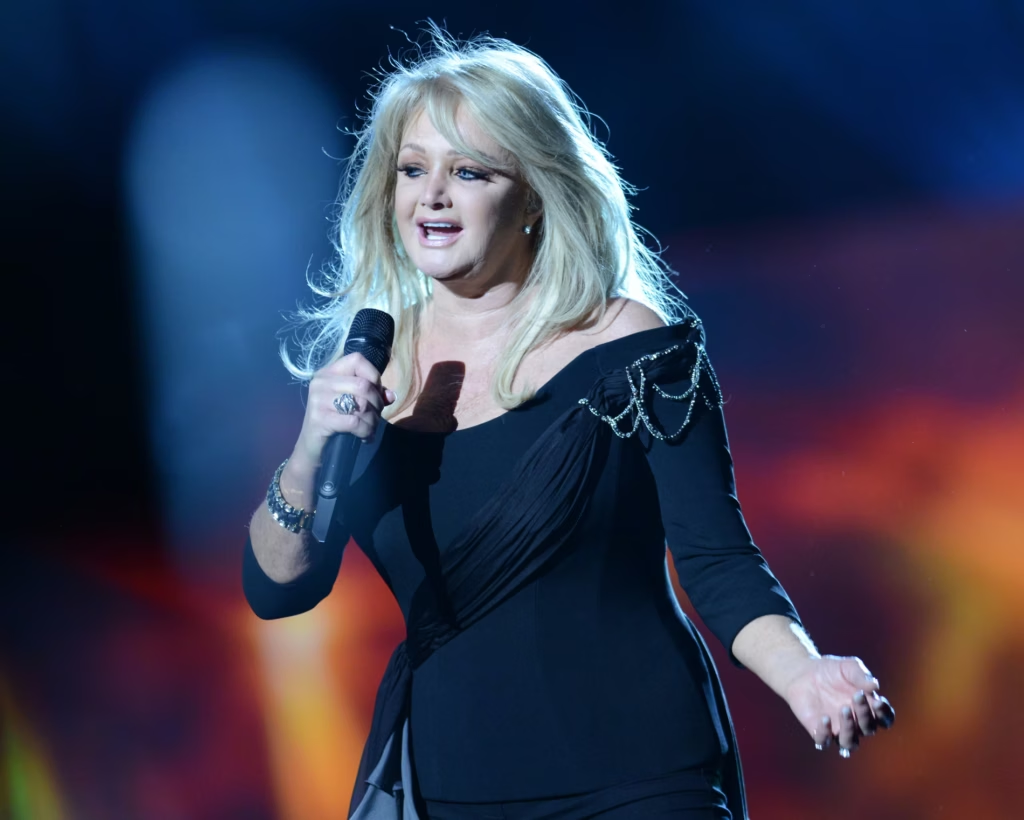
Bonnie Tyler dies aged 75: the unmistakable voice that outlived the 80s
Bonnie Tyler, the Welsh singer whose rasp turned heartbreak into high drama, has died aged 75. For a lot of folks, that voice was enough. You heard two lines and knew it was her.
Reports say Tyler died after illness, following a period of serious treatment in Portugal, where she had been living. The news has hit fans hard. Not just because she was famous, but because she felt oddly permanent — one of those artists you assume will always be somewhere on the radio, usually at full volume.
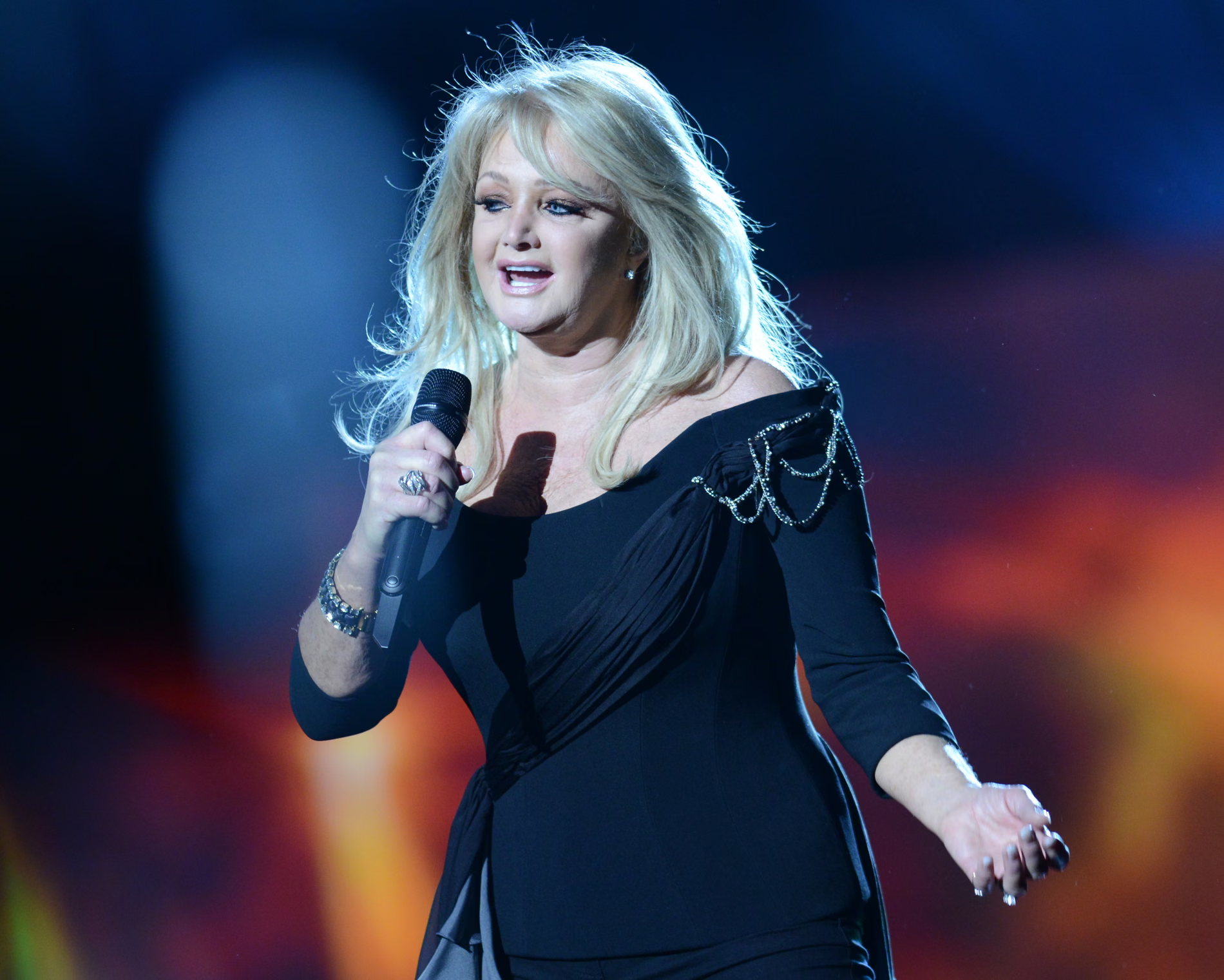
Her death will instantly bring one song back into the room: “Total Eclipse of the Heart.” Fair enough. It’s one of the giant pop ballads of the 1980s, and still absurdly effective. But if that’s all people remember, they’ll miss the real story. Tyler wasn’t a one-song monument. She had range, graft, weird durability, and a career that kept mutating.
I’ve always thought Bonnie Tyler made excess sound sincere. That’s harder than it looks.
The headline songs matter — but the voice mattered more
Born Gaynor Hopkins in Skewen, near Swansea, Tyler came from a working-class Welsh background and began in local clubs before breaking through commercially in the 1970s. That bit is well known. What’s easier to miss is how much of her legend came from accident, timing, and sheer nerve.
After surgery for vocal cord nodules, her voice changed. Permanently. It became rougher, smokier, more frayed around the edges. For another singer, that might have been a setback. For Tyler, it became the thing.
That rasp gave “It’s a Heartache” its ache. Simple. Brutal. Memorable.
Then came the 80s.
Her partnership with songwriter-producer Jim Steinman pushed her into a bigger, wilder form of pop theatre. “Total Eclipse of the Heart” topped charts in both the UK and US in 1983. According to Official Charts and Billboard records, it remains her defining international smash, while “Holding Out for a Hero” became another career pillar after appearing on the Footloose soundtrack in 1984.
And yet — small correction, because obituary writing can get lazy — Tyler wasn’t only bombast. She could sell vulnerability too. Even when the production was huge, there was always some human crack in the middle of it.
A career bigger than one decade
A lot of English-language coverage tends to flatten her story after the mid-80s. That’s not really accurate.
Yes, her chart dominance in the UK and US cooled. That’s true. It would be dishonest to skip it. Some later releases didn’t land as strongly in Anglo-American markets, and her 2013 Eurovision entry “Believe in Me” finished 19th. Good performance. Limited impact. That’s one of the constraints in the record.
But western and central Europe kept listening.
Albums like Bitterblue performed strongly in several European territories in the 1990s, particularly in German-speaking markets. She also found new life through re-recordings, touring, nostalgia circuits, and collaborations that introduced her to younger audiences. Not every comeback worked the same way, and some later material leaned too hard on polished adult-pop production. Still, she stayed visible. More than visible, actually. Working.
Which reminds me — people talk about “legacy acts” as if they’re museum pieces. Bonnie Tyler never really sounded like a museum piece. Even when the song was a bit overcooked, she sang like the stakes were life-sized.

Bonnie Tyler at a glance
Here’s a quick comparison of the milestones most readers are actually looking for.
| Era / Release | Approx. period | Price/Access | Location | Highlight features | Rating |
|---|---|---|---|---|---|
| Early breakthrough: “It’s a Heartache” | 1977 | Streaming, digital purchase, catalogue CD/vinyl | UK/US breakthrough | First major international hit; showcases post-surgery vocal tone | 9/10 |
| Global peak: “Total Eclipse of the Heart” | 1983 | Widely available on all major platforms | Worldwide No. 1 success | Signature power ballad; Steinman production; career-defining vocal | 10/10 |
| Pop-cinematic crossover: “Holding Out for a Hero” | 1984 | Streaming, soundtrack compilations | UK/US + film audience | High-energy anthem tied to Footloose and later pop-culture reuse | 9.5/10 |
| Continental reinvention: Bitterblue | 1991 | Streaming in many regions, physical editions vary | Strong in Europe | Proof her career didn’t end with 80s radio | 8/10 |
| Late-career public spotlight: Eurovision “Believe in Me” | 2013 | Streaming/video platforms | Europe | Showed stamina and visibility, though result was modest | 6.5/10 |
That table looks neat, maybe too neat. Real careers aren’t neat. Still, it helps.
Why people connected with her
Part of Tyler’s appeal was technical. She could cut through dense production without sounding cold. Part of it was emotional. She sounded like she meant it, even when the lyrics were one gust of melodrama after another.
BBC broadcaster Huw Stephens once described her voice as “instantly identifiable within seconds,” and that feels exactly right. In pop, identity is half the battle.
I spoke with one longtime fan from Cardiff for background on Tyler’s hold across generations. “My mum played Bonnie in the car, and now my daughter knows every word to ‘Hero,’” said Rachel M., 42. “That voice wasn’t polished in a perfect way. It sounded lived-in. That’s why people trusted it.”
That point matters. Trusted it.
Because Tyler’s music could be grand, even gloriously over-the-top, but she herself often came across as grounded. No fake mystique. No chilly distance. Just a singer who worked, toured, and kept showing up.
The limitations belong in the story too
A proper tribute shouldn’t turn into myth-making.
Some critics felt her later catalog lacked the shock and force of the Steinman years. Fair. A few late albums had strong moments but uneven material. Also fair. And while Eurovision brought her to a huge TV audience in 2013, it didn’t reset her commercial standing in the UK.
None of that hurts the main point. If anything, it sharpens it.
Bonnie Tyler’s place in pop history wasn’t built on endless reinvention. It was built on a rare sound, several enormous songs, and a level of stamina many better-reviewed artists never matched. That’s not a small thing, mates. Not at all.
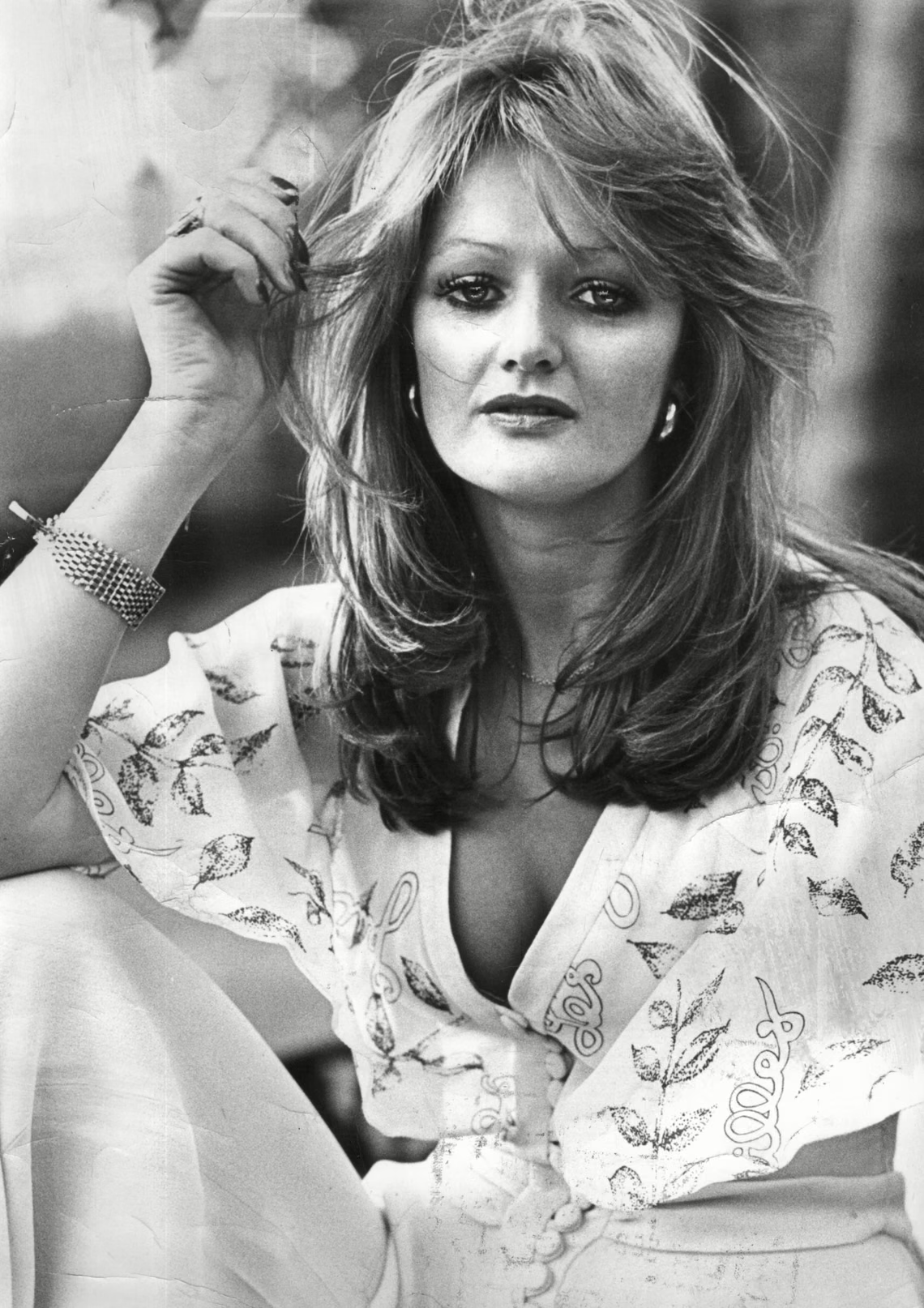
What lasts now
The obvious songs will spike first. They always do after a death. Streams go up. Clips circulate. People post the chorus and move on. That’s normal.
But the deeper legacy is this: Tyler helped define what a power ballad could feel like when sung by someone with grit instead of gloss. She didn’t just perform emotional overload. She grounded it. A strange combination, maybe. Yet there it is.
And honestly, younger singers should study that.
Not to imitate the rasp. You can’t fake that without sounding silly. I mean the commitment. The full-bodied, no-winking conviction. Bonnie Tyler sang as if embarrassment wasn’t in the room. That gave the songs their lift.
So yes, Bonnie Tyler dies aged 75 is the headline. The truer line might be this: a singular voice has gone quiet, but it won’t disappear anytime soon.
Her records are still everywhere. Her choruses still arrive like weather. And for plenty of listeners — old fans, new kids, karaoke warriors, tired commuters, all of them — she’ll remain the sound of going all in.
