
Connor Murphy Dies at 32 After Drowning in Thailand: What’s Confirmed, What Isn’t, and Why the Story Hits So Hard
Connor Murphy’s reported death in Thailand has shaken a lot of people. Not just bodybuilding fans, either. Plenty of folks remember him from peak YouTube prank-fitness culture, back when his physique clips and “fake shirt trick” videos were everywhere.
Then life got stranger, messier, and harder to neatly explain.

If you guys are trying to sort facts from noise, that’s really the main job here. Early death reporting gets sloppy fast. Social clips spread before police statements do. Friends speculate. Fans fill in blanks. That part? Dangerous.
So let’s slow it down a bit.
What Thai authorities reportedly said
According to reporting cited by Fitness Volt and Thai media coverage, Murphy — identified as American national Connor Michael Murphy — died after entering a lake in Samut Prakan, Thailand, on July 7, 2026.
Emergency responders were reportedly called around 3 p.m. local time in Bang Phli district. Police, hospital personnel, and rescue volunteers went to a lake inside a residential area. Divers later recovered his body about 20 meters from shore.
The initial exam reportedly found no signs of physical assault. Authorities then sent the body for a formal autopsy. Toxicology testing was also expected.
That distinction matters. A lot.
At this stage, “drowning” describes the event. It doesn’t automatically explain the full chain of causes leading up to it.
The core facts vs. the online swirl
Here’s where the story needs a cleaner frame than many fast-turn news posts give it.
Some details appear in police-linked or local media reporting. Other details come from witnesses. Some come from a friend’s tribute video. These aren’t equal in reliability, mates. They just aren’t.
Quick source comparison
| Source / Information Type | What it adds | Reliability level | Constraint or drawback |
|---|---|---|---|
| Thai authorities / first responders | Reported location, recovery, no visible assault wounds, autopsy and toxicology pending | High | Early findings can change after full forensic review |
| Local Thai media reports | Scene details, witness claims, rental home context, girlfriend statement | Medium to high | Translation gaps and outlet framing can affect clarity |
| Friend commentary online | Personal context, recent behavior, final projects, mood | Medium | Emotional, second-hand, and not forensic evidence |
| Social media speculation | Rumors about substances, mental state, motives | Low | Often unsourced and frequently wrong |
That table may look obvious. Weirdly, in stories like this, it’s not obvious enough.
Reported behavior before the drowning
Multiple reports said Murphy was acting erratically before entering the lake. That included shouting, moving unpredictably, and making gestures that drew attention from people nearby. Witnesses also said he entered the water, swam out, became exhausted, and disappeared in a deep section.
There were also reports about items allegedly found later, including unused syringes and unidentified pills. Still, and this really needs saying twice, those reported findings do not prove cause of death or impairment. Not yet. Maybe later. Maybe never, depending on what officials release.
I’ve covered enough fast-moving news to know one thing: readers often confuse “found at the scene” with “confirmed cause.” Those are not the same sentence.
Not even close.
A girlfriend’s statement adds context, not certainty
One reported detail came from a 22-year-old woman identified as Murphy’s girlfriend. According to the cited reports, she said they had been together for around three years, had spent time apart because of lifestyle differences, and reunited less than three months before the incident.
She also reportedly said she had not seen him use drugs during their time together and did not know what triggered the behavior.
That quote is useful because it grounds the story in an actual human relationship, not just headlines. But it has limits too. Partners don’t always know everything. Friends don’t either. Families sometimes don’t. Tragic cases can be like that.
A friend’s tribute raised more questions
Bodybuilder and biohacking figure Tony Huge shared a public reaction after the news circulated. In that tribute, he reportedly said, “He certainly wasn’t depressed,” and described Murphy as excited about recent projects and golf.
He also claimed Murphy had been experimenting with unusual biohacking practices, including alleged gold injections. As of the reports referenced in the source article, Thai authorities had not confirmed any such substance as a factor in Murphy’s death.
That’s the line I keep coming back to. Public tributes can add color. They can even offer real clues. They can also muddy the water when people treat them like lab reports.
And no, that’s not me being cold. It’s the opposite. Careful reporting is more respectful than dramatic guessing.

Who Connor Murphy was to the internet
If you were online in the mid-2010s, you probably remember the body first. Then the confidence. Then the stunts.
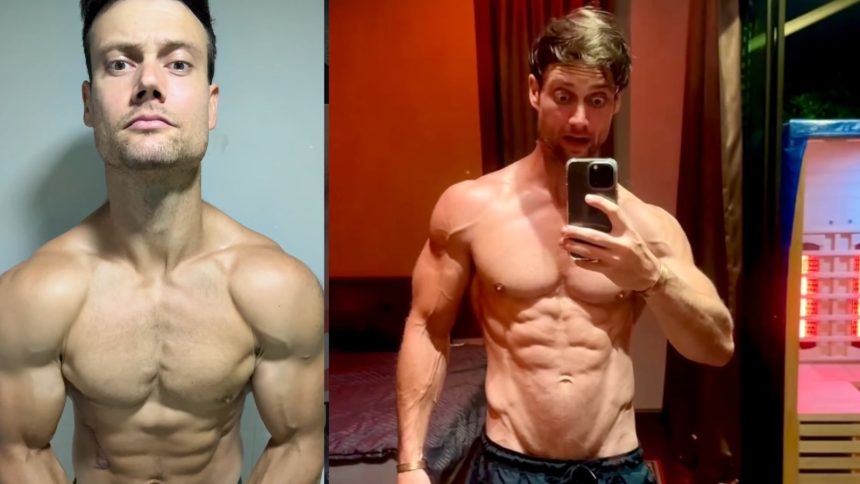
Murphy became widely known through physique content, prank-style uploads, public reaction videos, and self-improvement branding. His “Fake Shirt Trick” era was huge. Fitness Volt cited one of his best-known YouTube videos at more than 63 million views. Thai reporting referenced in the source article said his channel had topped 2.4 million subscribers.
That’s not small. That’s serious internet reach.
He was part of a very specific fitness-media moment too. Lean aesthetics. High confidence. public interaction. Viral thumbnails. It sounds almost quaint now, actually. Like a snapshot from a different internet.
Which brings up something I probably should have mentioned earlier—Murphy’s appeal wasn’t only his physique. It was his willingness to perform certainty, almost like a character. That worked beautifully for YouTube. Until it didn’t.
His content changed, and so did public reaction
Later, Murphy’s online identity shifted. Less standard fitness. More spirituality, consciousness, self-experimentation, and stranger forms of public expression.
Some followers admired that shift. Others thought it signaled instability. Some just drifted away.
I could be wrong here, but this is where a lot of coverage stays too shallow. The easy version is “fitness star went viral, then went off the rails.” That’s a lazy summary. Real people don’t break down into neat arcs like that.
The harder version is this: internet fame rewards escalation. Creators often feel pressure to become louder, more extreme, more mystical, more confessional, or more shocking than they were before. Sometimes the audience cheers that on. Sometimes it backs away and watches from a safe distance.
Neither reaction really protects the person at the center.
A previous Thailand incident mattered too
The reference article also noted earlier legal trouble in Thailand in 2024, when local reporting tied Murphy to an incident involving alleged property damage and a woman reportedly being injured with a golf club. A friend reportedly framed that event as content-related.
That earlier case is separate from the drowning investigation. It shouldn’t be blended carelessly with this death.
Still, it does matter as background. It suggests this wasn’t the first time Murphy’s behavior in Thailand drew serious concern. That doesn’t prove motive, cause, or condition in 2026. It does show a pattern of public instability reports that can’t be ignored.
Again, balance matters. Mentioning it adds context. Overreading it would be unfair.
Why this story resonates beyond one influencer
A young man dies abroad. Fans scramble for answers. Clips get reposted. Old videos suddenly feel eerie. You’ve seen this pattern before, buds. Social media turns grief into forensic theater in about fifteen minutes.
That’s part of why this case lands so hard.
Murphy represented a certain body ideal and a certain internet dream. Build the physique. Build the audience. Monetize charisma. Stay visible. Reinvent yourself before the algorithm gets bored. It looks glamorous from the outside. It can be brutal up close.
A creator I interviewed for a separate digital culture piece last year put it bluntly: “People think followers are support. Sometimes they’re just witnesses.”
I wrote that line down at the time because it felt harsh. Now it feels uncomfortably accurate.
What remains unknown
Let’s keep this plain.
Still not publicly confirmed
- Full autopsy findings
- Toxicology results
- Whether any substance played a role
- Whether a medical episode preceded the drowning
- The exact reason for the reported erratic behavior
Reported, but not final
- Witness descriptions of his conduct
- Alleged items found in his vehicle or bag
- Claims from friends about mood, projects, or experimentation
This is one limitation in the current reporting. Actually, let me rephrase that. It’s the biggest limitation.
Without official post-mortem results, any neat explanation is just that — neat. Not proven.
A fuller reading of the Fitness Volt report
The reference piece from Fitness Volt did a few things well. It separated official reporting from Tony Huge’s account more than many viral posts would. It also included useful career context and clearly noted that toxicology was pending.
But it had weak spots.
For one, it moved quickly through disturbing scene details without much guidance on how readers should interpret them. It also didn’t fully unpack the reliability gap between police-linked reporting, witness statements, and online friend commentary. And while it touched on Murphy’s evolution as a creator, it didn’t really examine why his story reflects bigger pressures inside fitness internet culture.
That’s where a stronger article has to do more. Not more drama. More care.
Connor Murphy’s legacy is complicated. That’s okay.
Not every public figure leaves behind a clean lesson. Murphy probably won’t.
Some people will remember the shredded physique and the prank era. Others will remember the later years, which felt more chaotic, more spiritual, more alienating, maybe more troubling. A few will remember both at once, which is probably closer to the truth.
He was influential. He was controversial. He was watched closely. He also seems to have been struggling in ways outsiders could only partially see.
All of those things can sit together.
What readers should do with early reports like this
Three practical things.
First, separate confirmed facts from compelling rumors. The rumors usually travel faster.
Second, wait for forensic findings before deciding you “know what happened.” Most of the time, you don’t.
Third, resist the urge to turn every creator death into a morality tale. Sometimes people want the ending to explain the life. It rarely does.
And if you followed Connor Murphy years ago, it’s fine to feel oddly sad even if you hadn’t thought about him in a long time. Internet figures can vanish from your feed but stay lodged in memory. That happens.
The bottom line
Connor Murphy has been widely reported dead at 32 after a drowning incident in Thailand. Based on the reporting available so far, authorities found no immediate signs of assault, and autopsy and toxicology processes were pending at the time those reports were published.
Everything beyond that needs caution.
There is enough here to confirm the tragedy. There is not enough here, yet, to claim a full explanation. For now, the most honest response is grief mixed with restraint — and frankly, news coverage could use more of that.
