
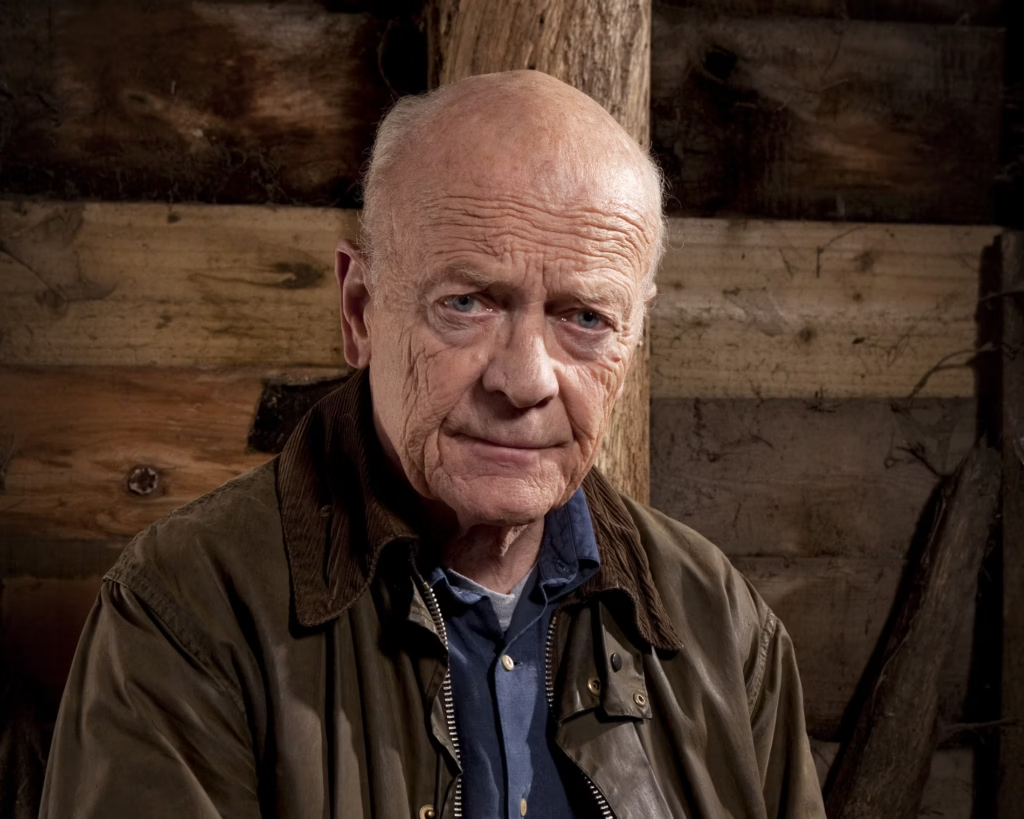
Michael Byrne Dies at 82: A Career That Reached From ‘Harry Potter’ to ‘Braveheart’
Michael Byrne, the British actor who turned up in some of the biggest screen stories of the last half-century, has died at 82.
If you’ve ever watched him and thought, “Wait, I know that face,” you’re not alone. Byrne was one of those screen performers who could walk into a scene, say a handful of lines, and leave a mark that stuck. He was in Harry Potter and the Deathly Hallows: Part 1, Braveheart, Indiana Jones and the Last Crusade, and a long list of British TV and film projects that filled out a career most actors would gladly trade for.
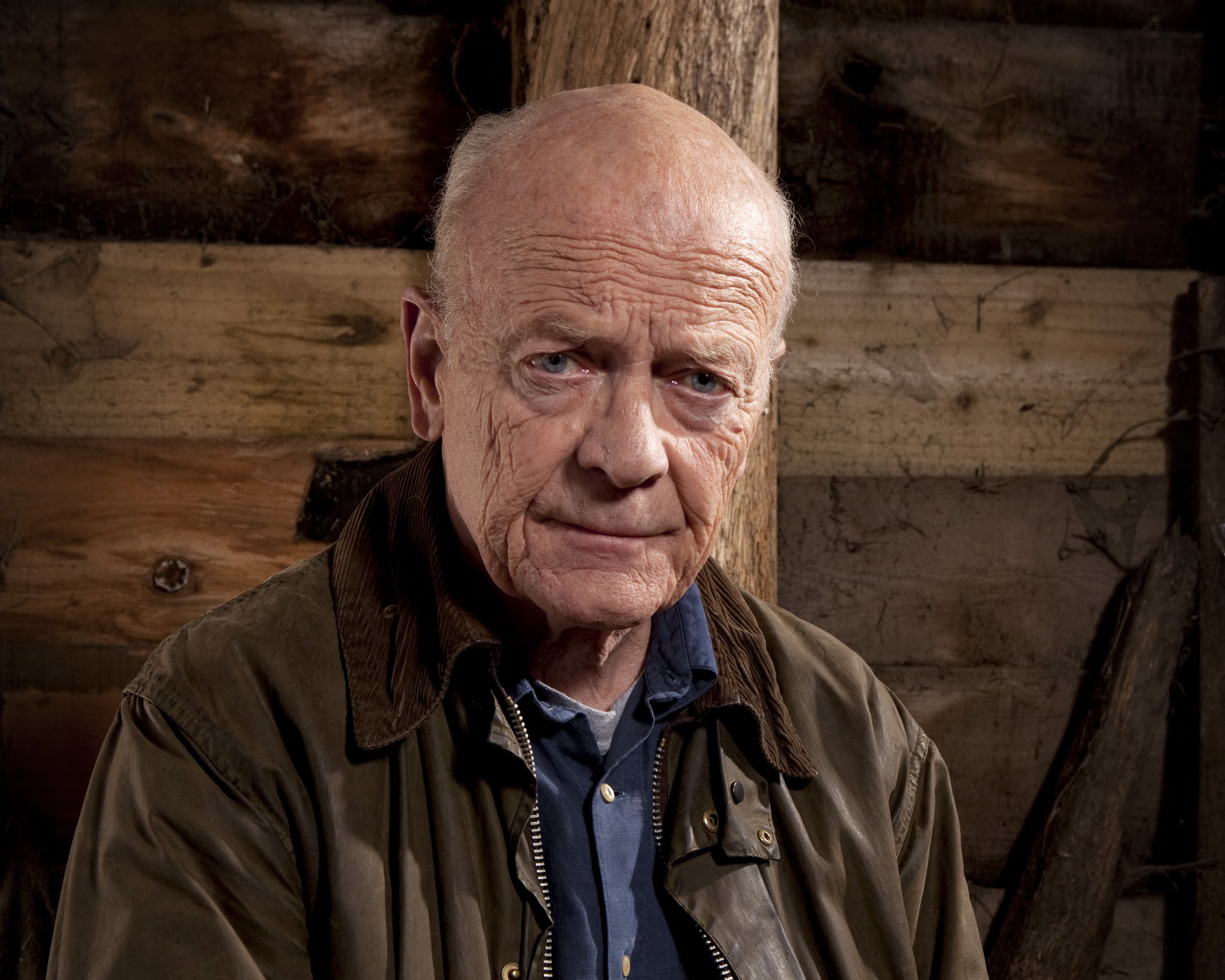
The report of his death, first carried by The Guardian, noted that no cause had been released at the time. Byrne died on June 20.
That part is plain enough. But the larger story is the one behind the headline. Byrne’s career wasn’t built on celebrity noise or red-carpet fame. It was built on repetition, range, and the sort of reliability directors quietly love. He was there in war films, thrillers, period dramas, and prestige fantasy. Different costumes. Same sharp presence.
What made Michael Byrne such a familiar face?
Not every actor becomes a lead. Not every actor needs to.
Byrne’s gift was his ability to look fully at home inside the machine of a big production. He could play an officer, a villain, a soldier, a minor aristocrat, a hard-edged authority figure — and do it without fuss. That sounds simple. It isn’t. Plenty of actors can hit the marks. Fewer can make a small role feel lived-in.
He had that thing British screen actors of his generation often carried so well: a clipped control that could turn icy, funny, or sad depending on the scene. You could drop him into a wartime epic or a fantasy universe, and he’d fit right in without looking like he was posing for the camera. Which sounds like a small compliment, maybe. It’s not. On film sets, that kind of ease is gold.
Byrne’s filmography stretched across decades, and that kind of longevity doesn’t happen by accident. It takes discipline. It takes adaptability. And, frankly, it takes a willingness to keep showing up even when the industry keeps changing around you.
From the stage to television and then the big screen
Byrne started on stage before moving into television and film. He worked with Laurence Olivier’s National Theatre Company, which says a lot right away. If you’ve spent time around British acting circles, you know that affiliation carries weight. It means craft first, ego later.
His stage credits included Romeo and Juliet, The Cherry Orchard, Much Ado About Nothing, Death and the Maiden at the Royal Court, The Double Dealer, and The Seagull. That’s a deep well of serious theatre, not just a quick pass through the classics. He also worked alongside names like Maggie Smith and Robert Stephens.
A quick tangent, since it matters more than people think: actors who start in theatre often bring a different rhythm to film. They listen better. They wait. They understand silence. That shows up even in the smallest movie role, the ones that last maybe a minute or two. Byrne had that sort of training behind him, and you can feel it in the way his screen characters land.
His television career began in the 1960s, with appearances in No Hiding Place, Silent Playground, and ITV Saturday Night Theatre. That early TV work matters because it gave him a base in an era when British television was still building its modern identity. It also meant he was never just a film actor. He was part of the broader TV-and-film ecosystem that kept British drama humming for decades.
The roles people remember most
Here’s where things get interesting.
Byrne appeared in Harry Potter and the Deathly Hallows: Part 1 as an older version of Gellert Grindelwald, the dark wizard later played by Johnny Depp in the Fantastic Beasts films. It was a brief role, but one in a franchise watched by millions, which means a whole new generation may have seen him without even knowing his name.
That’s often how long-career actors end up in the public memory: one major franchise, one unmistakable face, and a thousand other credits that quietly do the rest of the work.
He also played the villainous Vogel in Indiana Jones and the Last Crusade, one of the best-known entries in Steven Spielberg’s adventure series. And then there was Braveheart, where he portrayed Smythe, a violent nationalist soldier in Mel Gibson’s Oscar-winning film.
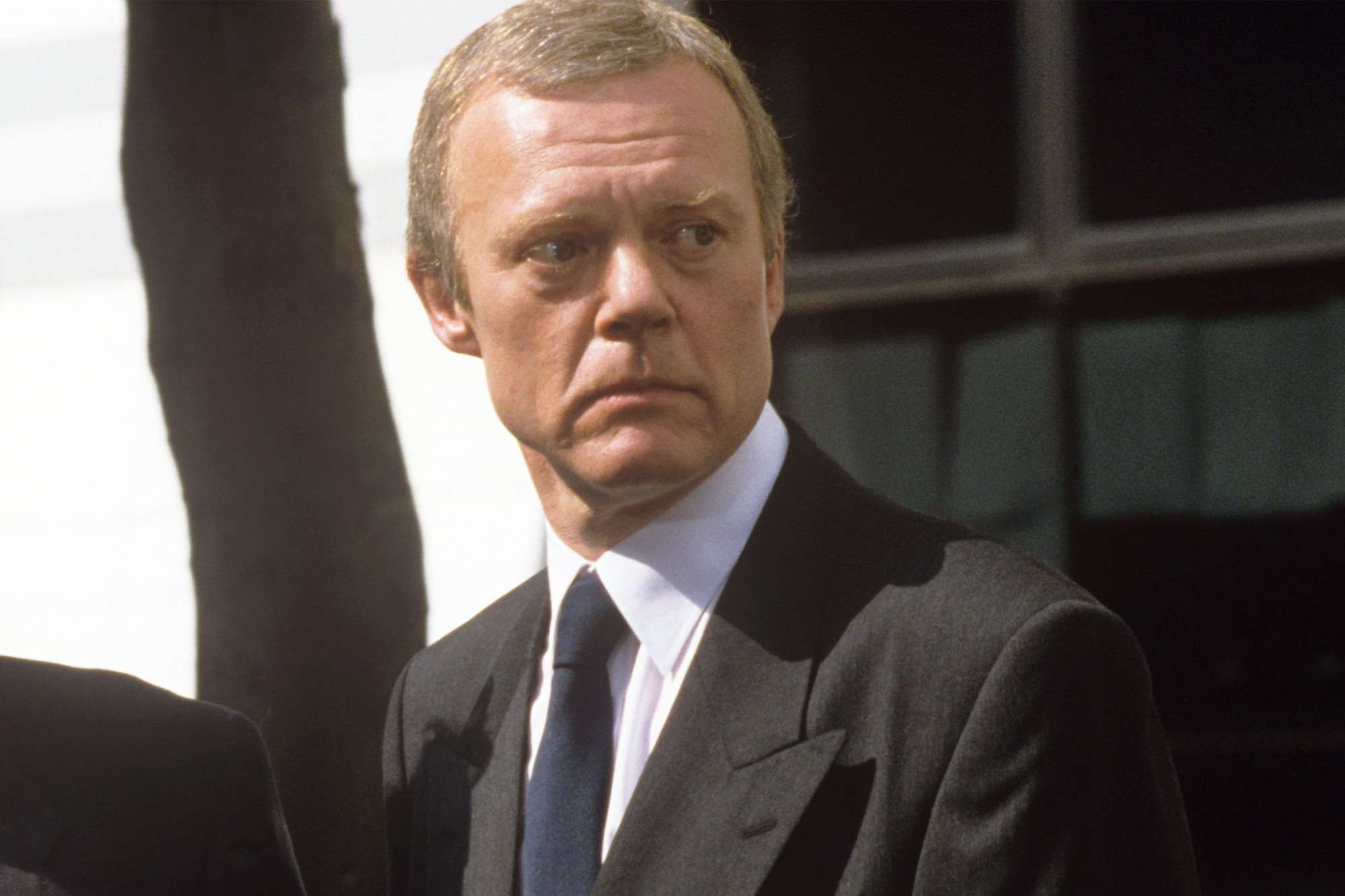
Those are three very different kinds of screen worlds, and Byrne moved through them with the same professional steadiness. Wizarding fantasy, swashbuckling adventure, historical war drama. No drama about being “typecast,” really — he made a career out of being exactly the actor filmmakers needed for that moment.
The war-film years and the durability of his career
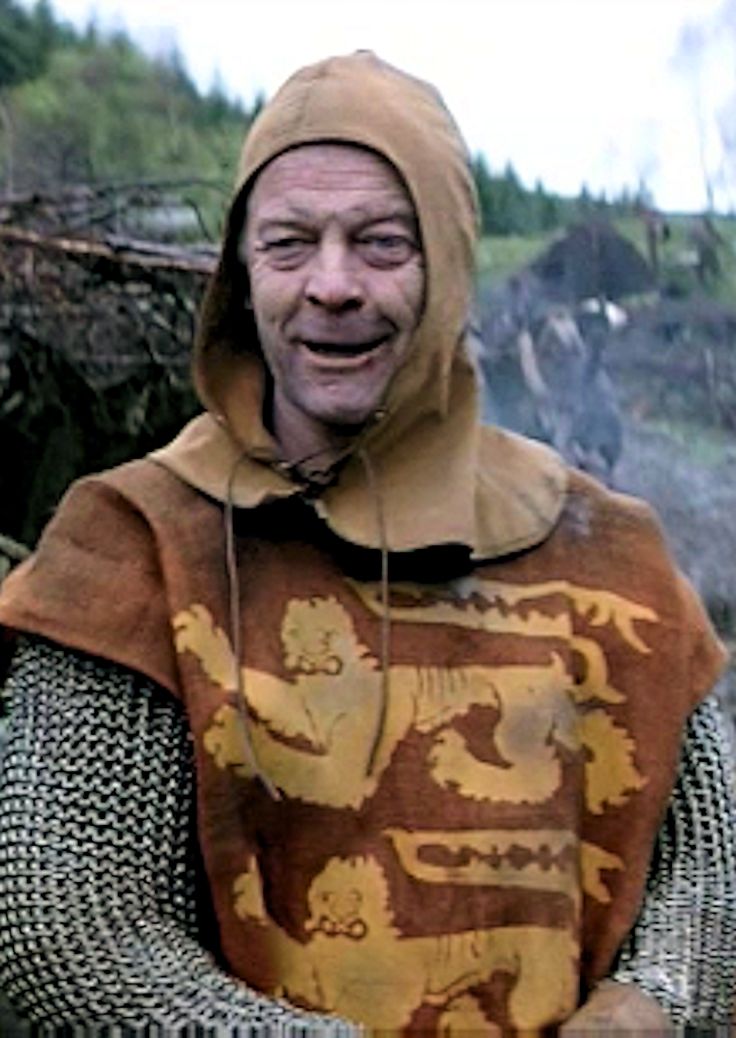
Michael Byrne in “Braveheart,” one of the performances many viewers still associate with his on-screen intensity and military roles.
In the 1970s, Byrne appeared in a run of World War II films, including The Eagle Has Landed, A Bridge Too Far, and Force 10 From Navarone. If you know those titles, you already know the sort of terrain he was working in: uniforms, command rooms, peril, clipped dialogue, moral tension. Lots of smoke. Lots of men trying not to flinch.
That phase of his career shows something easy to overlook. Byrne wasn’t bouncing around for novelty. He was building a body of work inside a few reliable genres and then carrying that discipline into later decades. By the time he reached the 1990s and 2000s, he had accumulated more than 170 credits.
More than 170.
That number can blur past you if you read too quickly, so let’s say it another way: he kept working. For decades. Through different eras of British television, through the changing shape of cinema, through the rise of franchise filmmaking, through all the smaller shifts that usually knock working actors off course.
He also showed up in films such as Gangs of New York, Tomorrow Never Dies, and Diana. Again, not tiny cultural footnotes, but big-name productions with serious casts and serious expectations.
Why actors like Byrne matter more than people realize
This is the part that gets flattened in a lot of obituaries, and a bit unfairly so. People tend to focus on the biggest title in the headline and move on. But actors like Byrne are part of the glue of film history. They’re the ones who make the world around the stars feel credible.
Imagine Braveheart without the stern military figures. Or Indiana Jones and the Last Crusade without a convincing villain in the background of the chase. Or Harry Potter without older wizards, messengers, and shadowy presences who help the magic feel old and lived-in. The lead actors carry the narrative, sure. Yet the film’s texture often comes from performers like Byrne.
I’ve always thought those supporting roles are harder than they look. You don’t get as much time. You don’t get as many close-ups. You have to sketch a whole life in a few beats. Byrne was good at that, and not in an obvious showy way. More in the way a carpenter is good: clean lines, sturdy work, no wasted motion.
That may not sound glamorous. It is, though. Actually, let me rephrase that — it’s the kind of glamour that lasts.
Family, final years, and what was reported
According to The Guardian, Byrne is survived by his ex-wife, Carole Nimmons, who the paper noted cared for him toward the end of his life, along with his daughters Tara and Bryony, and grandchildren Tom, Chloe, and Jasmine.
That kind of detail changes the tone of a remembrance. It reminds you this wasn’t just a professional life measured in credits and roles. There was a private life too, with care, family, and the ordinary human stuff that sits behind all the public work.
And really, that’s the piece people often forget when they read about an actor’s death. The screen persona can be crisp and finished and immortal-looking, but the person behind it lived a much messier, quieter, more ordinary reality. Same as the rest of us. Just with better lighting.
A career built the old-fashioned way
Byrne’s career feels almost old-school now. Not because he worked in old films — though he certainly did — but because he came up through theatre, then television, then film, and kept going. No social media circus. No manufactured mythology. Just work.
Some actors arrive with a burst and disappear fast. Others never become famous in the way headlines usually reward, but they endure. Byrne was one of the enduring ones.
And that’s why his death lands with a little more weight than a simple list of credits. He was part of the fabric of British acting, the sort of performer whose name may not be the first one mentioned in casual conversation, yet whose face was instantly recognizable once it appeared on screen. You know the type, mates. The scene steadies when they enter it.
A final thought, though maybe not a polished one: there’s something oddly comforting about a career like his. It proves that not every meaningful acting life needs to be built on stardom. Some are built on consistency, skill, and the trust of directors who knew exactly what they were getting.
Michael Byrne had that trust.
And for seven decades of screen work, that was enough to leave a real mark.
