
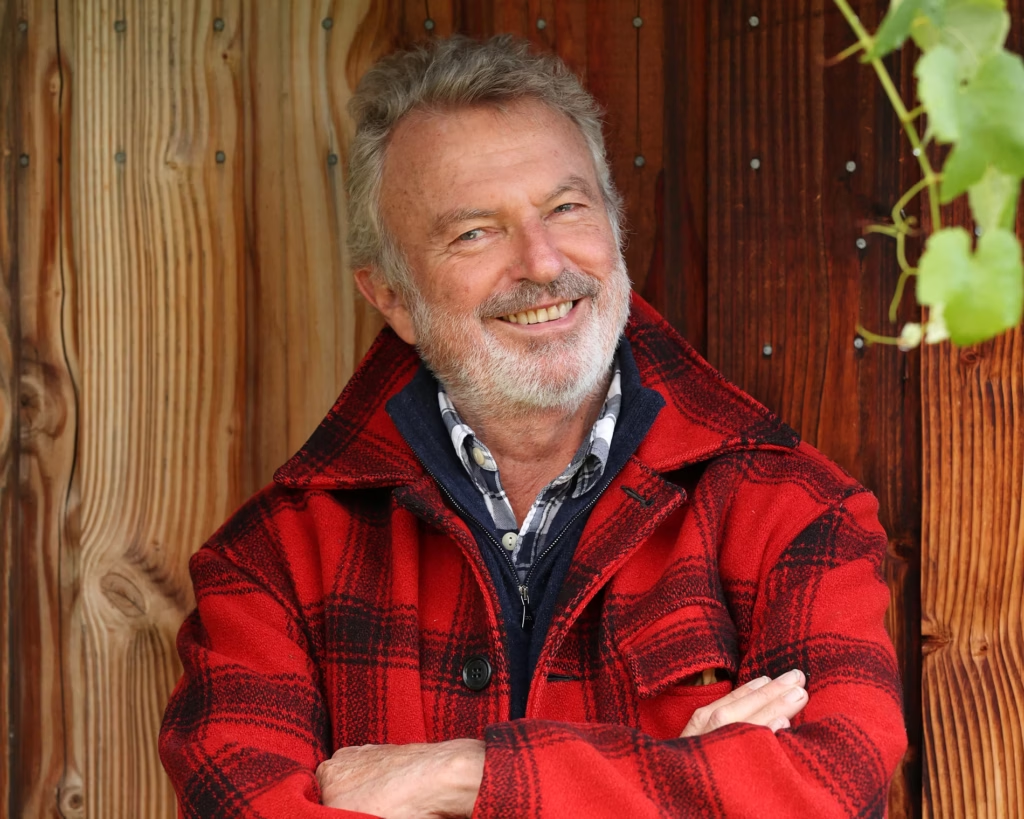
Sam Neill, actor and Jurassic Park star, dies aged 78
He had one of those faces you don’t forget. Calm. Wry. A little rueful.
Sam Neill died aged 78, and the news landed with a quiet shock. Not because he was invisible. Far from it. Because he felt permanent. Like one of those actors who would just keep turning up, dryly amused, in the best possible way.
The announcement came through his Instagram account on Monday. Family members said he died in Sydney, surrounded by loved ones. No cause of death was given. They also said he had remained cancer-free after treatment for blood cancer. That detail made the loss sting in a stranger way. Hope had been there. Then, suddenly, gone.
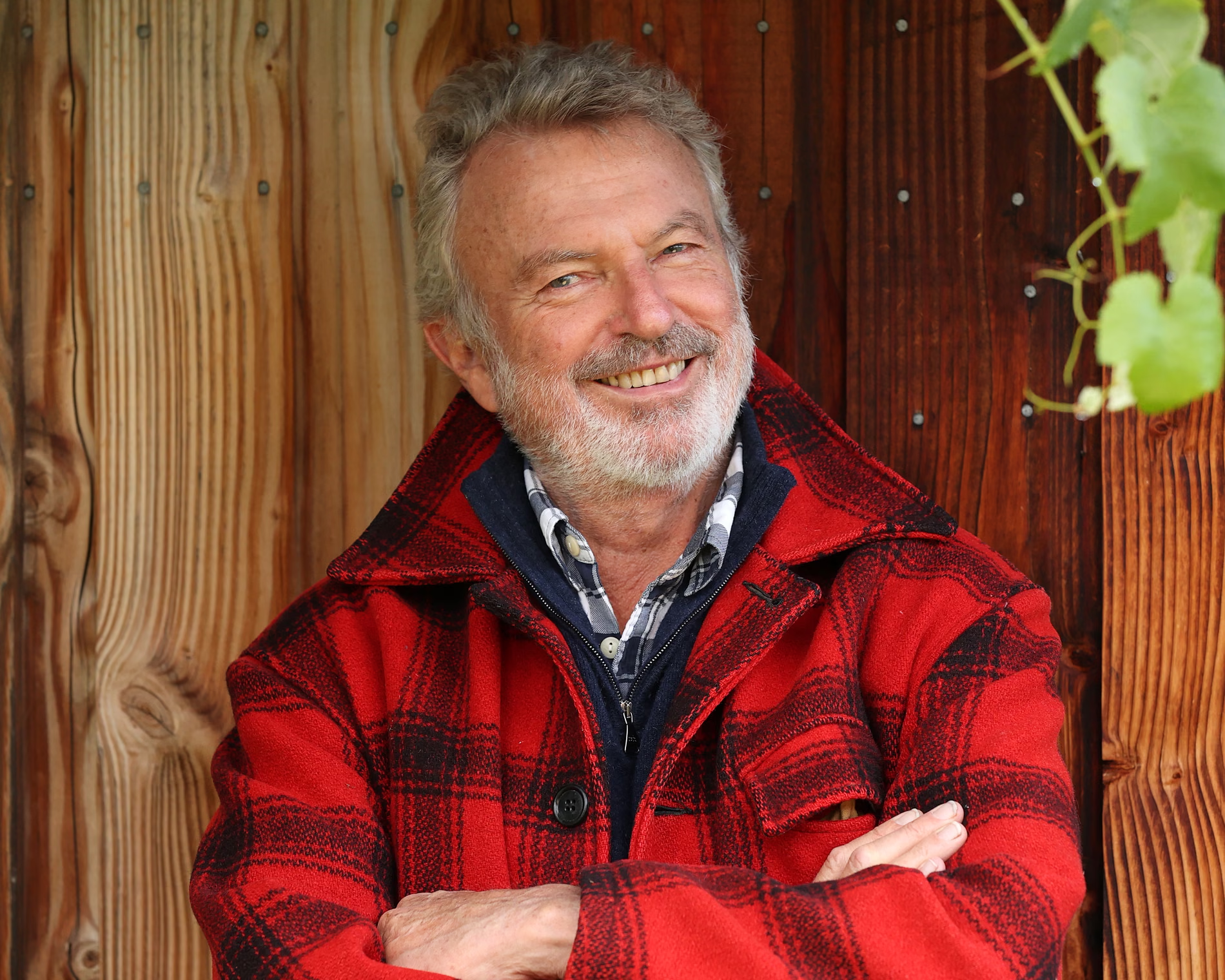
The man behind Alan Grant
Neill was born Nigel John Dermot Neill in Omagh, Northern Ireland, in 1947. His family moved to New Zealand in 1954.
That move shaped him more than people sometimes remember. He became a New Zealand actor, yes. But he also carried that outsider energy with him. I’ve always thought that made him unusually watchable. He could seem aristocratic, then relaxed, then vaguely mischievous. All in one scene.
He took the name Sam when he was 12. Too many Nigels at school, apparently. And honestly, “Sam Neill” sounds like a man who should be trusted with the camera’s attention. “Nigel Neill” sounds more like a solicitor. He joked about that himself later, which tells you a fair bit about his charm.
He studied in Christchurch. He tried law. It didn’t stick. He later called that year “catastrophic.” That’s a pretty good way to say it. Brutal, even.
Then came theatre. Downstage Theatre in Wellington paid him $35 a week, plus leftover food from audience meals. Not glamorous. Not even close. But lots of careers start in those thin, scrappy places.
Which reminds me of something I probably should have said earlier—actors who look effortless on screen are often the ones who had to work hardest for the illusion.
From local roles to international notice
Neill’s breakout arrived with Sleeping Dogs in 1977. It was the first New Zealand film to open in the US.
That matters more than it sounds like. Early visibility like that can change a career’s direction. After that, he moved through a string of roles that built range instead of just fame.
He appeared in My Brilliant Career in 1979. Then came Omen III, Possession, and Evil Angels opposite Meryl Streep. He also turned up in The Hunt for Red October. By then, he had done something tricky: he had become familiar without becoming flat.
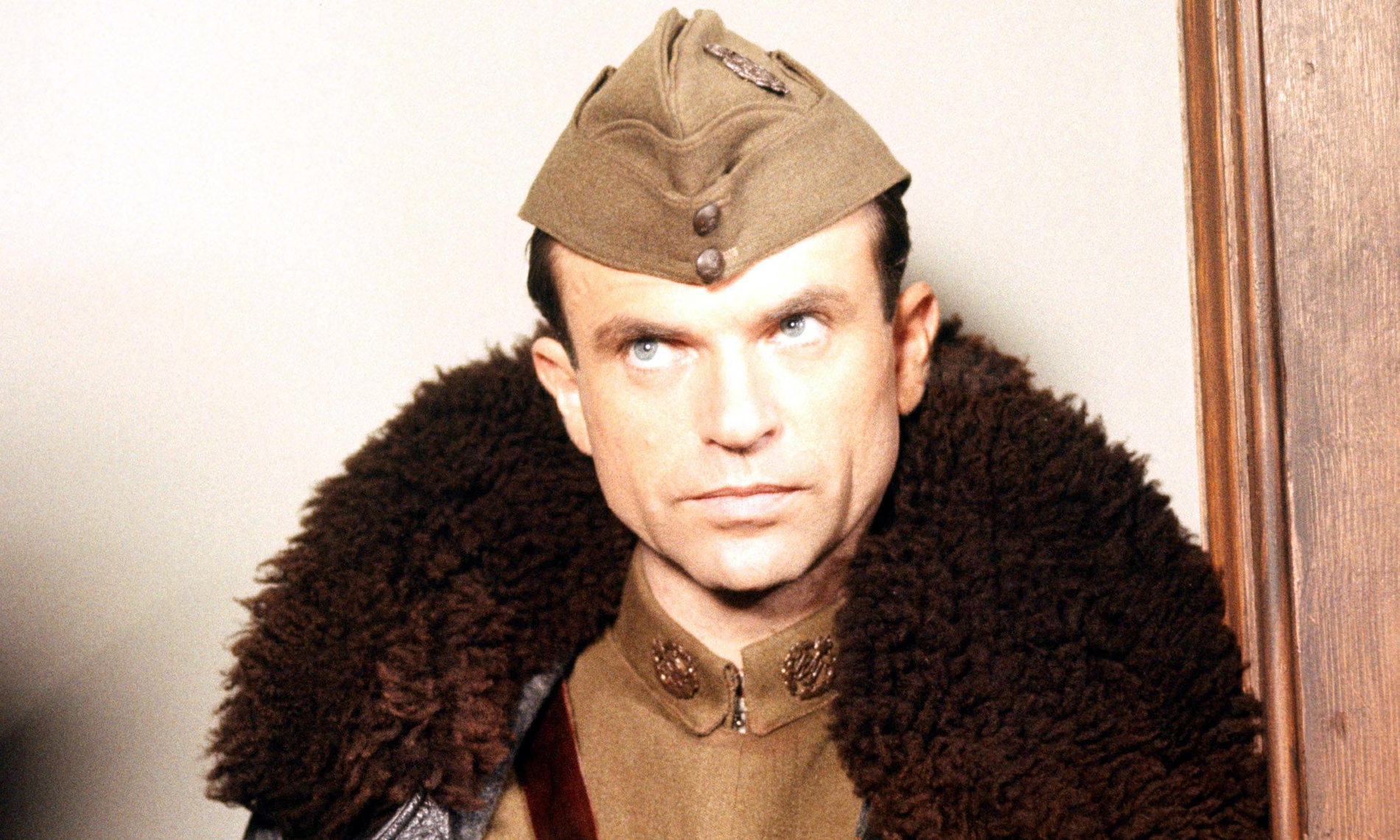
He was often cast as either the romantic lead or the dangerous man. Sometimes both. That duality gave his performances tension. He could be warm and threatening in the same breath. Not many actors can do that without overplaying it.
There were limits, of course. Neill was never the kind of global superstar who dominated headlines every year. He wasn’t built for noise. He was built for presence. That’s a different thing. Maybe a better one.
Why Jurassic Park changed everything
Then came 1993. Spielberg. Dinosaurs. A role offered first to Harrison Ford, then passed to Neill.
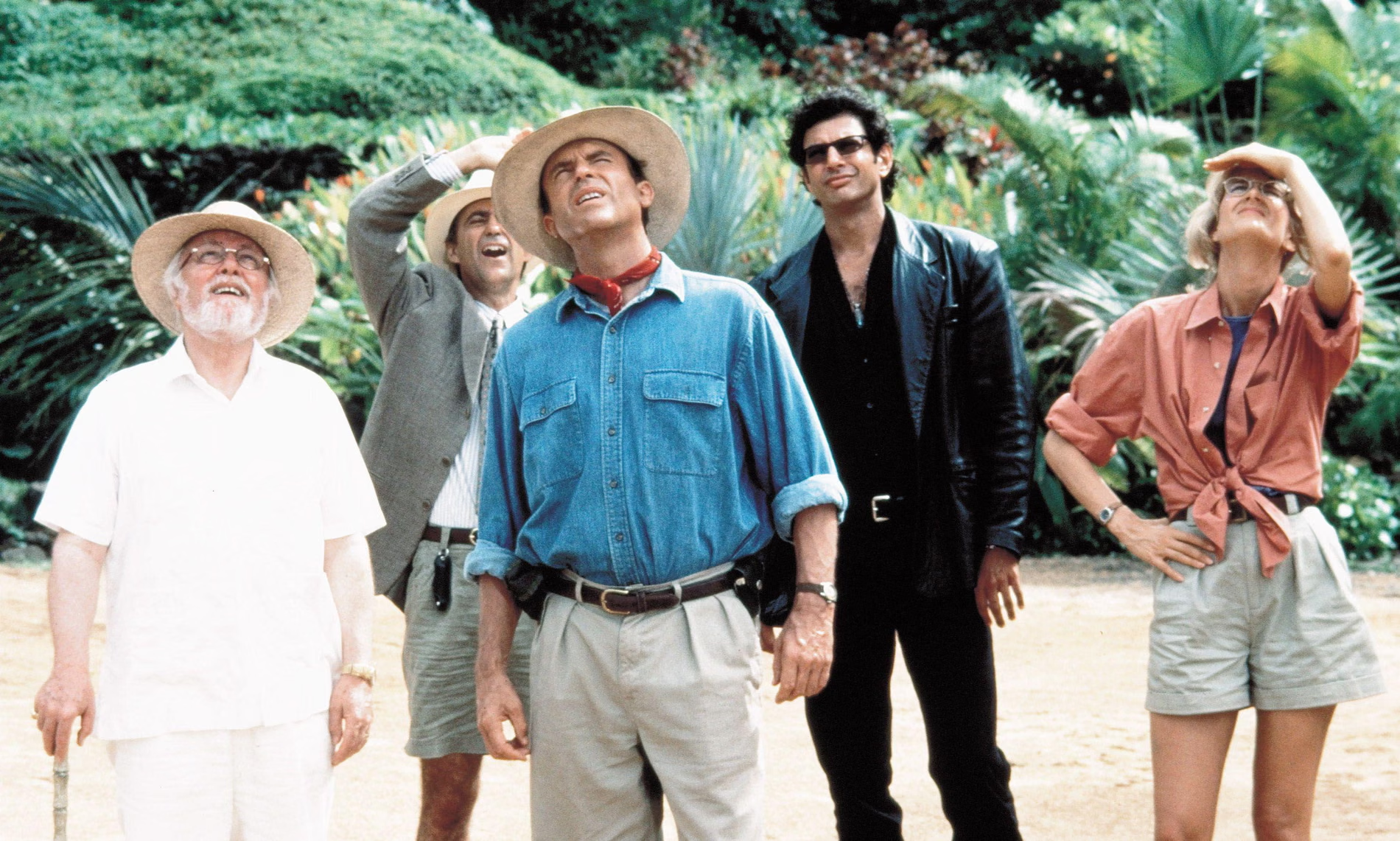
As Dr Alan Grant in Jurassic Park, he became part of movie history. Simple as that.
Grant was not flashy. He was skeptical, intelligent, and faintly exhausted. Neill played him like a man who knew danger could look absurd right up until it swallowed you. That made the character feel real. Kids loved the dinosaurs, sure. But adults noticed the human center Neill gave the film.
He returned for Jurassic Park III and later Jurassic World Dominion. That last return felt like a small reunion with an old scar. Familiar. A bit tender.
“I’m not afraid to die,” Neill told The Guardian in 2023, “but it would annoy me.”
That line says so much about him. Practical, dry, unwilling to perform sentimentality. He wasn’t posing for legacy. He was just being Sam Neill.
A career that kept moving
Neill’s filmography was huge. More than 150 credits across five decades.
He worked in Dead Calm, The Jungle Book, In the Mouth of Madness, Event Horizon, Bicentennial Man, The Dish, and Peter Rabbit. He also found a fresh wave of affection with Hunt for the Wilderpeople in 2016, which opened the door to his cameo appearances in Taika Waititi’s Marvel films.
That late-career stretch matters. Some actors fade into nostalgia. Neill didn’t. He kept adapting. He kept showing up with the same easy authority.
He also did a lot of television. Reilly, Ace of Spies earned him a Golden Globe nomination. He played Maj Chester Campbell in Peaky Blinders. He appeared in The Tudors, The Twelve, The Simpsons, and Rick and Morty.
There’s a slight irony here. Big-screen stars often look diminished on TV. Neill didn’t. He fitted in. Then he quietly took over a scene.
The cancer battle and the honesty around it
In 2022, Neill revealed he had stage three angioimmunoblastic T-cell lymphoma, a type of blood cancer.
That news came with the kind of candour people appreciated immediately. He didn’t turn his illness into a spectacle. He wrote about treatment, uncertainty, and the strange business of living with time hanging over you.
By 2023, he said the cancer was in remission. He still described monthly chemotherapy in a contract arrangement that would cover treatment if he lived beyond four months. That detail was strange, a bit clinical, and weirdly human at once. Life is like that. Messy paperwork beside mortal fear.
He also said he hoped for “another decade or two” because of his terraces, olive trees, cypresses, and grandchildren. That line cut through everything. Not fame. Not awards. Just wanting to stay long enough to see things grow.
A family friend told me once, speaking generally about public figures with illness, “You can hear the courage in what they don’t dramatize.” That feels apt here. Neill was never loud about suffering. He was direct.
The farmer, the wine maker, the bloke with the chickens
Neill lived at Two Paddocks, his farm and vineyard in Central Otago.
He loved the place, but he was honest about the cost. He called it “a ridiculously time- and money-consuming business.” Then he added that he wouldn’t do it if it weren’t satisfying and fun. That sounds about right. Farming has a way of humbling even the most famous people.
He also named animals after colleagues, including Laura Dern, Kylie Minogue, and Helena Bonham Carter. That’s a very Sam Neill thing to do. Slightly absurd. Quite affectionate.
One local visitor, quoted in a New Zealand wine profile years ago, said of the place: “It feels personal, not polished.” That tracks. Neill’s public image was never glossy. It was lived-in.
Awards, honours, and the quieter kind of fame
Neill received an OBE in 1991 for services to acting. He was later made a Distinguished Companion of the New Zealand Order of Merit in 2007. In 2022, he accepted a knighthood and became Sir Sam Neill.
Those honours fit, though they never fully explained him. His real reputation came from something simpler. He was trusted. Directors trusted him. Viewers trusted him. That counts for a lot.
He also had a family life that he described as “somewhat haphazard.” He is survived by four children and eight grandchildren. Andrew, Tim, Elena, and Maiko were all part of that larger family story. Reunions, adoptions, separations, all of it. Real life rarely follows a tidy script.
A final note on what he leaves behind
Sam Neill wasn’t the loudest actor of his generation. Not the flashiest either.
He was steadier than that. Better than that, too, in a way that doesn’t always get rewarded on the internet. He gave cinema one of its most reliable faces. He gave Jurassic Park its moral center. He gave New Zealand a global ambassador who never seemed to forget where he came from.
And he gave audiences a rare thing: intelligence without coldness.
That’s why people will keep watching him. Not because he was everywhere. Because when he arrived, the room changed.
